To control their vast empire, the Romans utilized a powerful military, advanced engineering, and a structured provincial government. Trade was vital, linking Rome to resources like Egyptian wheat and British tin. While Emperors held absolute power, they relied on civil servants and the Senate to manage peace and war.
Succession often involved adopting heirs, though power struggles frequently led to civil war or military coups. Culturally, Romans are known for their literature, engineering feats like aqueducts and roads, and violent spectacles in the Colosseum. Religious shifts culminated in the 313 CE Edict of Toleration, easing the path for Christianity.
The Western Empire fell in 476 AD following barbarian invasions and internal instability, though the Eastern Byzantine Empire survived for another millennium. Historians attribute Rome's fall to various factors, including the rise of Christianity and chronic political assassinations.
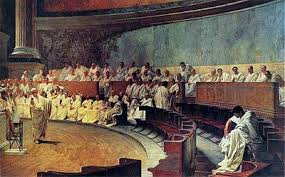
The political structure of the Imperial Roman State